
I am lactose intolerant. I LOVE dairy, so I do my best to work around it. Here is some information I found on X that may be useful to you – it is to me!
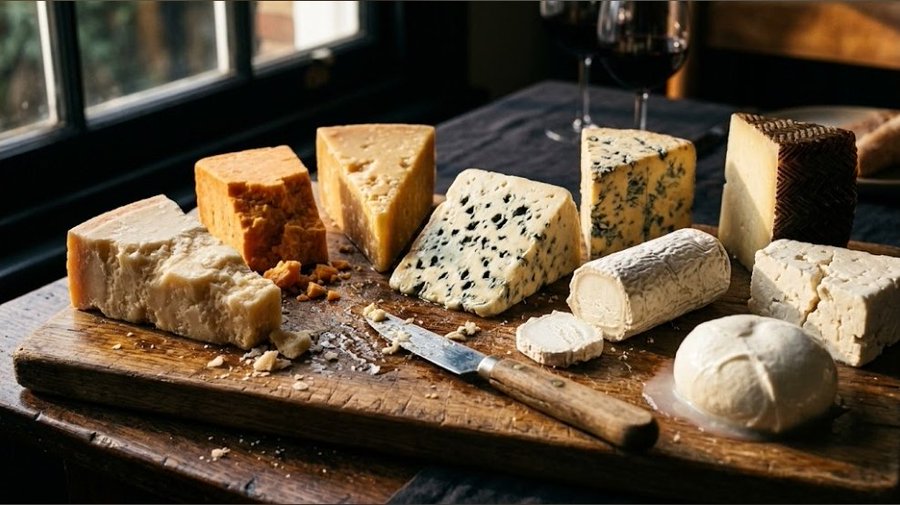
Somewhere on this list is the cheese your gut has no problem with, and it is probably not the one you were told to try.
Three separate things upset people, and they pull in opposite directions.
Lactose is the milk sugar. It leaves with the whey and gets eaten during ageing, so old cheese has none.
Casein is the protein. Most cow herds are A1. Sheep and goat are not.
Histamine is made by the bacteria while the cheese ages, so it climbs the longer it sits.
Which means the advice everybody gives, to buy the mild stuff, is right for one of those and exactly wrong for the other.
Fresh, if you flush or get headaches
– Mozzarella: 20% fat. Trace lactose, no histamine.
– Ricotta: 13% fat. Lactose present, no histamine.
– Mascarpone: 44% fat. Some lactose, no histamine. Fattiest thing in the aisle.
– Young chèvre: 21% fat. Goat. Low lactose, low histamine. The gentlest dairy going.
– Feta: 21% fat. Ewe. Low lactose, moderate histamine. It never asked for a salad.
Aged, if milk bloats you
– Mature cheddar: 34% fat. No lactose, high histamine. Cut it thick.
– Manchego: 33% fat. Ewe. For everyone who blames the cow.
– Aged gouda: 31% fat. Butterscotch, crystals, the richest K2 going.
– Pecorino: 30% fat. Ewe. Roman soldiers were issued it.
The blues, which are the aged end taken further
– Roquefort: 31% fat. Ewe, raw milk, aged in the Combalou caves. Salt, cream and a slap.
– Stilton: 35% fat. Opened Boxing Day, rediscovered in March, still magnificent.
– Gorgonzola dolce: 30% fat. Spreadable. Not a starter cheese, a finishing one.
Blue is the highest histamine on the board, so it is the wrong end entirely if you flush, and the best flavour available if you do not.
Then the elite tier, which is raw milk.
This is the actual dividing line and almost nobody knows it. Pasteurize the milk and you kill the native flora the pasture put there, then add back a laboratory starter with a handful of strains in it. Raw milk keeps hundreds. That is where the depth in a great cheese comes from, and it is why the best cheeses in Europe are legally required to be made this way.
– Parmigiano Reggiano: raw cow’s milk, mandatory. Two years.
– Comté: raw cow’s milk, mandatory. Fridge-cold is a crime here.
– Gruyère: raw cow’s milk, mandatory.
– Roquefort: raw ewe’s milk, mandatory.
– Beaufort: raw cow’s milk, mandatory. Summer milk off alpine pasture.
And then Stilton, which by law must be pasteurized. The traditional raw milk version still exists, made to the old recipe, but it is not allowed to use the name and is sold as Stichelton instead. Britain wrote its own best cheese out of its own protected designation.
So: bloating means go older. Headaches and flushing mean go fresher. Heavy on cheddar but fine in Spain means it was the cow, and you can have sheep and goat for the rest of your life.
Either way you get complete protein, calcium, B12, vitamin A, and K2 in every aged cheese with a great deal of it in gouda. Ewe’s milk carries more CLA.
Then American singles, which cannot legally be called cheese in their own country because they fall below the 51% threshold. The packet says pasteurised prepared cheese product. Seventeen ingredients, individually wrapped, engineered to melt.
Everything else here is a superfood and always was. Find the one you can digest, and buy far too much of it.
Original post: https://x.com/SamaHoole/status/2093621154208420302?s=20




 Stella's Place