
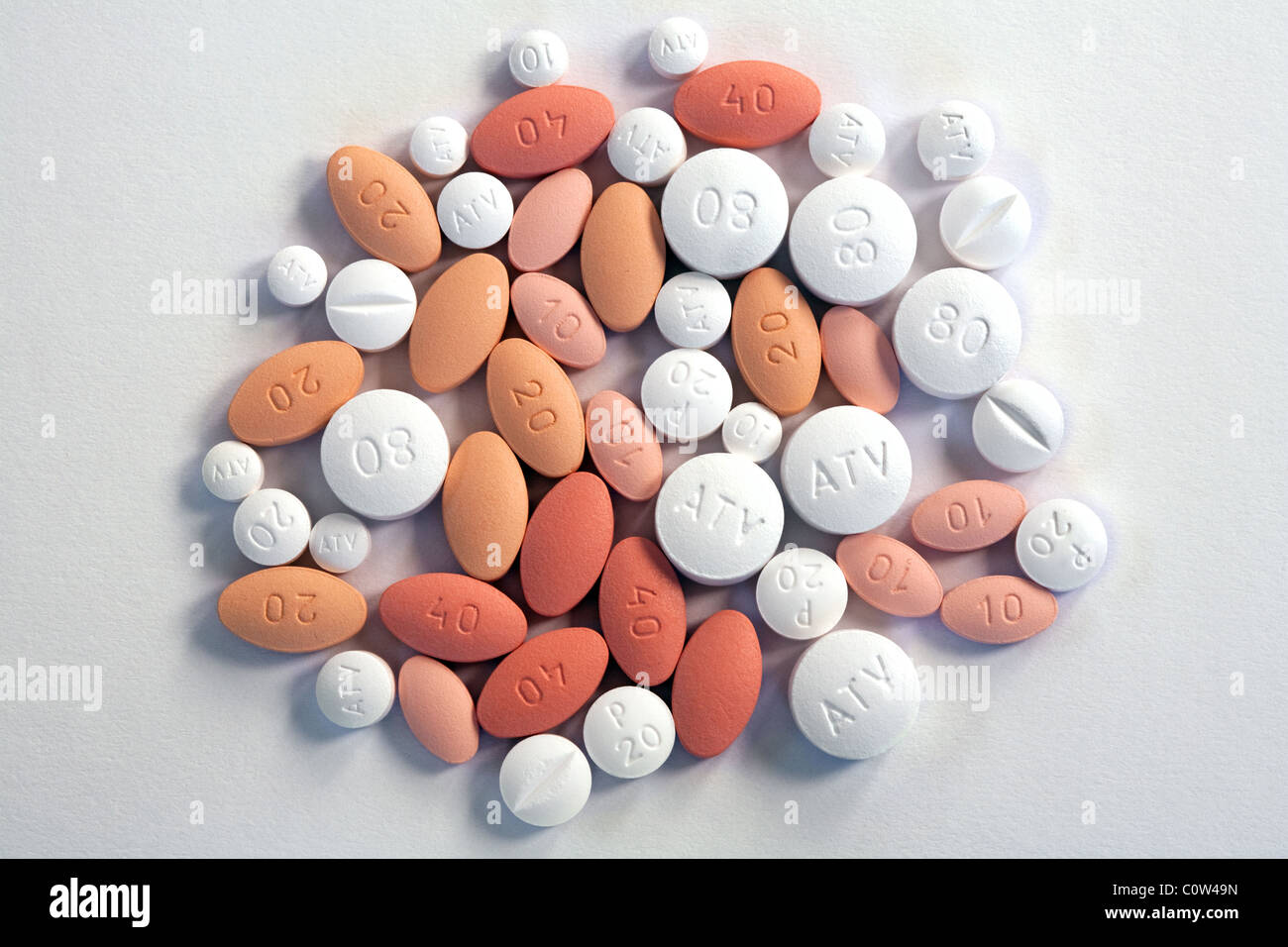
I brought up how I hate taking statins to my cardiologist at my last appointment, and he said that it will allow me to live longer. Nothing else. I hate the aching, and spend part of every day on a heating pad for relief.
I already take vitamin D, and I just started taking CoQ10, although my doctor didn’t tell me to. My cardiologist has prescribed rosuvastatin for me, which (see below) supposedly doesn’t cause brain fog, memory loss etc. Ezetimibe (see below) was recently added to the list of prescription drugs that I take.
I had never heard anything about alternatives, or what causes the side effects.
I am printing this and taking it to my cardiology appointment next month.

https://x.com/afshineemrani/status/2068366482179010915?s=20
Afshine Emrani MD FACC
I’m a cardiologist. I prescribe cholesterol-lowering drugs every single day. They save lives. That science is settled and I will never tell you otherwise. But I’m going to say something that will make a lot of my colleagues uncomfortable — because someone needs to say it, and your doctor probably won’t.
Too many physicians make you feel crazy when you bring up statin side effects.
You walk into your appointment and say “my muscles ache constantly” — and you’re told it’s in your head. You say “I’m exhausted all the time” — and you’re told it’s your age. You say “my sex drive disappeared” — and you get an awkward silence followed by a subject change. You say “I don’t feel like myself anymore” — and you’re told the benefits outweigh the risks, take the pill, stop reading the internet.
I’ve watched it happen in my own field for twenty years. The conversation gets shut down. The patient gets dismissed. And then they do the one thing we should be most afraid of — they stop the medication entirely, without telling us, and lose the cardiovascular protection that’s keeping them alive.
That is the real cost of not being honest. Not the side effects themselves — the silence that drives patients away from treatment.
In my practice, I see statin-related complications in at least 25% of my patients. Muscle pain. Fatigue that doesn’t resolve with sleep. Reduced sexual drive. Brain fog. Cramping. Joint stiffness. Weakness that makes exercise — the very thing we tell them to do — feel impossible.
Some of these improve with CoQ10 supplementation and optimizing vitamin D. Many do not.
I wrote about the diabetes risk of statins in a New York Times op-ed in 2012. The backlash from the cardiology establishment was immediate. I was told I was undermining trust in a life-saving drug class. Fourteen years later, every major guideline acknowledges the risk I warned about. It’s in the prescribing information. The physicians who attacked me for saying it now teach it to their residents.
The truth doesn’t care about professional comfort. It never has.
Now a paper published this week in Science Advances has finally explained the mechanism behind statin myopathy — and the finding validates what millions of patients have been telling their doctors for years.
Researchers discovered that statins activate the NLRP3 inflammasome in muscle cells — triggering an inflammatory cascade that causes muscle cell death, activates atrophy pathways, and disrupts muscle metabolism. This is entirely independent of the drug’s cholesterol-lowering effect.
The muscle damage isn’t caused by lowering cholesterol. It’s caused by a completely separate pharmacological action through a different pathway.
The critical implication: the side effect can potentially be separated from the benefit.
Blocking NLRP3 or restoring isoprenoids prevented muscle cell death without interfering with cholesterol reduction. Future therapies could preserve the cardiovascular protection while eliminating the muscle toxicity.
Even more striking — the researchers found that background systemic inflammation significantly lowered the statin dose needed to trigger muscle damage. Patients with chronic inflammation, gut dysbiosis, or metabolic syndrome may be experiencing myopathy at doses their doctors consider “too low to cause problems.” They’re not imagining it. Their inflammatory state is priming the pathway.
The muscle pain was never in their heads. It was in their NLRP3 inflammasome. And we finally have the molecular proof.
Here’s what I actually do in my practice — because I refuse to choose between protecting the heart and respecting the patient.
Whenever possible, I avoid statins as my first-line approach for eligible patients by using alternatives that lower LDL through entirely different mechanisms with no muscle toxicity:
PCSK9 inhibitors — Repatha and Praluent. Injections every 2-4 weeks that dramatically lower LDL without touching muscle tissue. No myopathy. No fatigue. No brain fog. For patients who can access them, these are transformative.
Inclisiran — Leqvio. An siRNA injection I administer twice a year in my office. It silences the PCSK9 gene in the liver. Two shots a year. LDL drops roughly 50%. No muscle side effects. No daily pills. Now approved as first-line monotherapy. This is the future of lipid management and I use it aggressively.
When statins ARE clinically necessary — and sometimes they are, especially post-heart attack or in combination therapy — I choose hydrophilic statins like rosuvastatin or pravastatin. These do not easily cross the blood-brain barrier. The cognitive complaints — the fog, the memory issues, the feeling of “not being yourself” — are substantially less common with these formulations because the drug stays out of the central nervous system.
I never prescribe a statin without CoQ10. 100-300mg daily. Statins deplete the cellular energy molecule your muscles and heart depend on. Replenishing it reduces muscle symptoms in many patients. It should be standard practice. The fact that it isn’t is a failure of our field.
I check vitamin D and optimize it aggressively. Low vitamin D — which is epidemic — worsens muscle symptoms independently and compounds whatever the statin is doing. Target 50-80 ng/mL, not the bare minimum of 30.
Bempedoic acid — Nexletol — for patients who can’t tolerate any statin. Works upstream in the cholesterol pathway and is not active in muscle tissue. Specifically designed to avoid myopathy.
Ezetimibe added to a lower statin dose. Cut the statin intensity, add ezetimibe to maintain the LDL reduction, and halve the muscle exposure.
There is no excuse in 2026 for telling a patient “just deal with the muscle pain.” The toolbox is deep. The alternatives exist. The only barrier is a physician’s willingness to listen and adapt.
I want to speak directly to every patient who has been dismissed.
Your muscle pain is real. Your fatigue is real. Your cognitive changes are real. Your loss of drive — in every sense of the word — is real. A paper in Science Advances just proved the mechanism. You were never crazy. You were experiencing a documented inflammatory response in your muscle tissue that your doctor didn’t have the science to explain — until this week.
And I want to speak directly to my colleagues.
We have to be honest. Not just about the benefits — which are enormous and undeniable — but about the side effects, the mechanism, and the alternatives. Patients who feel heard stay on treatment. Patients who feel dismissed stop their medications in silence — and die from the heart attacks we could have prevented if we’d simply been willing to have an honest conversation and switch the approach.
The cardiologist who tells you statins are flawless is not protecting you. The wellness influencer who tells you statins are poison is not protecting you either. The truth lives in the middle — where it always has.
Statins save lives. The side effects are real. The mechanism is now proven. The alternatives exist. And you deserve a doctor who holds all four of those truths at the same time.
Both things can be true. They always could.
Now we have the science to prove it.




 Stella's Place
Link to the study mentioned in the post:
https://www.science.org/doi/10.1126/sciadv.adz3612
LikeLiked by 2 people
When we first moved back to this province, my husband and I found a new doctor. I always accompany my husband as his advocate, but also booked a separate appointment for myself.
The doctor immediately tried to put me on statins. Why? Because he put all his female patients over a certain age and weight on statins. Not because we had any sign of heart disease. I refused, but every time I saw him, he pushed it. I brought up the studies I’d read, and the diabetes connection. He said, “Oh, the Jupiter study” and talked about how it was a bad study. I’d never heard of it before and told him I read studies from places like John Hopkins, etc. Eventually, he left the province and we’ve gone though a couple more doctors since then. Not one of them has ever offered me statins.
He did, however, put my husband on statins. Why?
Because my husband was over a certain age and weight and… get this… diabetic. Did his blood tests show a need for statins? Nope. He just blanket prescribed them as a preventative. My husband has also gone though a couple of doctors since then, and not one has suggested he stop taking them. Once a doctor prescribes something, other doctors are leery about stopping them.
LikeLiked by 3 people
Your comment jogged my memory about something I read and meant to post here the other day. Fair warning. If you look into this concoction, there are warnings that it can interact with your medications. As near as I can tell, the interactions seem to be that the tea is working, therefore reducing the needs for the medications, or perhaps making a lesser dosage advisable. Which seems like a win to me.
I may need to recruit my neighbors and family to save those skins for me.
Onion skin tea—made by boiling clean, dry outer onion layers—is rich in quercetin, a potent antioxidant. Studies show this compound can help lower LDL (“bad”) cholesterol, reduce arterial inflammation, and regulate blood pressure, making it a highly beneficial supplement for long-term cardiovascular health. [1, 2, 3]
The Science Behind Heart Health
How to Prepare & Use It
To get the maximum benefits without the bitter taste, follow these preparation steps:
Precautions
While onion skin tea is a natural, healthy addition to your diet, it is not a replacement for prescribed heart medications. Drinking it daily is generally safe for most people, but excessive intake might cause mild digestive upset. [1, 2, 3, 4]
LikeLiked by 2 people
Another thing that I have just started drinking is 100% pomegranate juice, which is rich in antioxidants and thought to lower blood pressure, increase levels of HDL, and lower inflammation. I mix it with plain carbonated water, and it is delicious, although it does have calories.
https://www.health.com/pomegranate-juice-benefits-11846472
LikeLiked by 3 people
I love pomegranate anything. Used to keep the arils and put them in yogurt and granola. I don’t eat those much now because I rarely eat breakfast, but I still love it. I wonder if they also have some benefit. I occasionally drink pomegranate kombucha and I think I might get some juice to add more to the kombucha.
I have learned a lot about how to keep my blood sugar from spiking, or at least reduce the amount of elevation a lot. This paid off on my recent blood work with some improvement. I am not pre-diabetic but in my opinion, I am insulin resistant.
For that reason, I have eliminated all snacks and drinks between meals except water or black coffee or unsweetened tea (rarely drink tea now). But I still try to remember to get my fermented foods in with my meals.
I have come to believe that losing weight and improving my insulin resistance will help a lot of things. Not all, but it’s a big priority for me. I hope that it will help my kidney stay as healthy as possible too.
I have to wait to see what the results of the thyroid medication is on the blood sugar. My reading tells me it’s going to raise it.
Have you looked at nattokinase? A nurse friend recommended it, and after looking into it, I started it, but once the kidney problem happened I decided it was not safe for me. I’d really like to take it. She had excellent results.
LikeLiked by 3 people
I take thytrophin for my thyroid. I have had one doctor tell me I was wasting my money because I didn’t have a thyroid problem. My test results always come back perfectly normal. I wasn’t willing to discontinue the thytrophin to show him taking it is why my test results are normal.
LikeLike
Doctors are human…..and sometimes, humans are lazy. Doctors fall in this trap and most know little to nothing about diet and food and how it MAY be able to mitigate some things. The other part about the statins is how much of the literature manipulates statistics. When they tell you it increase life expectancy, what they fail to tell you is that “expectancy” is 1.2 years, and the statins may increase that to 1.45 years. (example)
LikeLiked by 3 people
Unfortunately most of our doctors coming out of medical school now are “prescribers”.
LikeLiked by 1 person
My doctor wants me to take statins, but I have decided if those few extra months I might live are bought with extra pain from now until I die, I will pass.
LikeLike