
Day ONE HUNDRED THIRTY-NINE of Presidential recovery.
Day ONE HUNDRED THIRTY-NINE of Presidential recovery.
All about the Trump/Musk feud. From “X”:

Beyond the Trump-Musk fallout?
At first impression, it makes no sense that Musk would start firing away at the (admittedly imperfect) budget bill, or escalate to DefCon 1, by tweeting nonsense about impeachment, the Epstein files, or disengaging his space efforts from the U.S. agenda to stay preeminent in space.
After all, he and Trump have roughly the same enemies—the Left that is now delighted at their quarrel—and the same general aims: to repeal the progressive cultural project, to restore meritocracy, to strive to ensure the U.S. is globally preeminent economically and militarily, to unfetter the economy, and to limit government intrusion.
It is an irony of our checks and balances that an elected president, with majorities in both branches of Congress, still does not govern without compromise with hundreds of representative and senators.
Trump’s task is now further complicated because for the first time in U.S. history he is also the daily target of a systemic attack by legions of cherry-picked, lower-court, liberal federal district judges, who find their five-minutes of liberal fame, by issuing fiats not for their regional jurisdictions, but for all 340 million Americans everywhere.
Musk, on the other hand, as the richest man in the world and CEO of his companies, can rule by directives, in a way a president, the most powerful man in the world, simply cannot. What the White House may have wanted in the bill, and what they could reasonably achieve were not synonymous.
Moreover, Musk knows that his nemesis is the left, not MAGA, much less Trump.
Larry Kudlow’s look at the bill/bill process and Elon’s take on it.
81 years ago today, on Tuesday, June 6, 1944, the Allied invasion of Normandy began with Operation Overlord. Better known as D-Day , it was the largest seaborne invasion in history. The operation began the liberation of German-occupied northwestern Europe from Nazi control, and led to the Allied victory in the West.
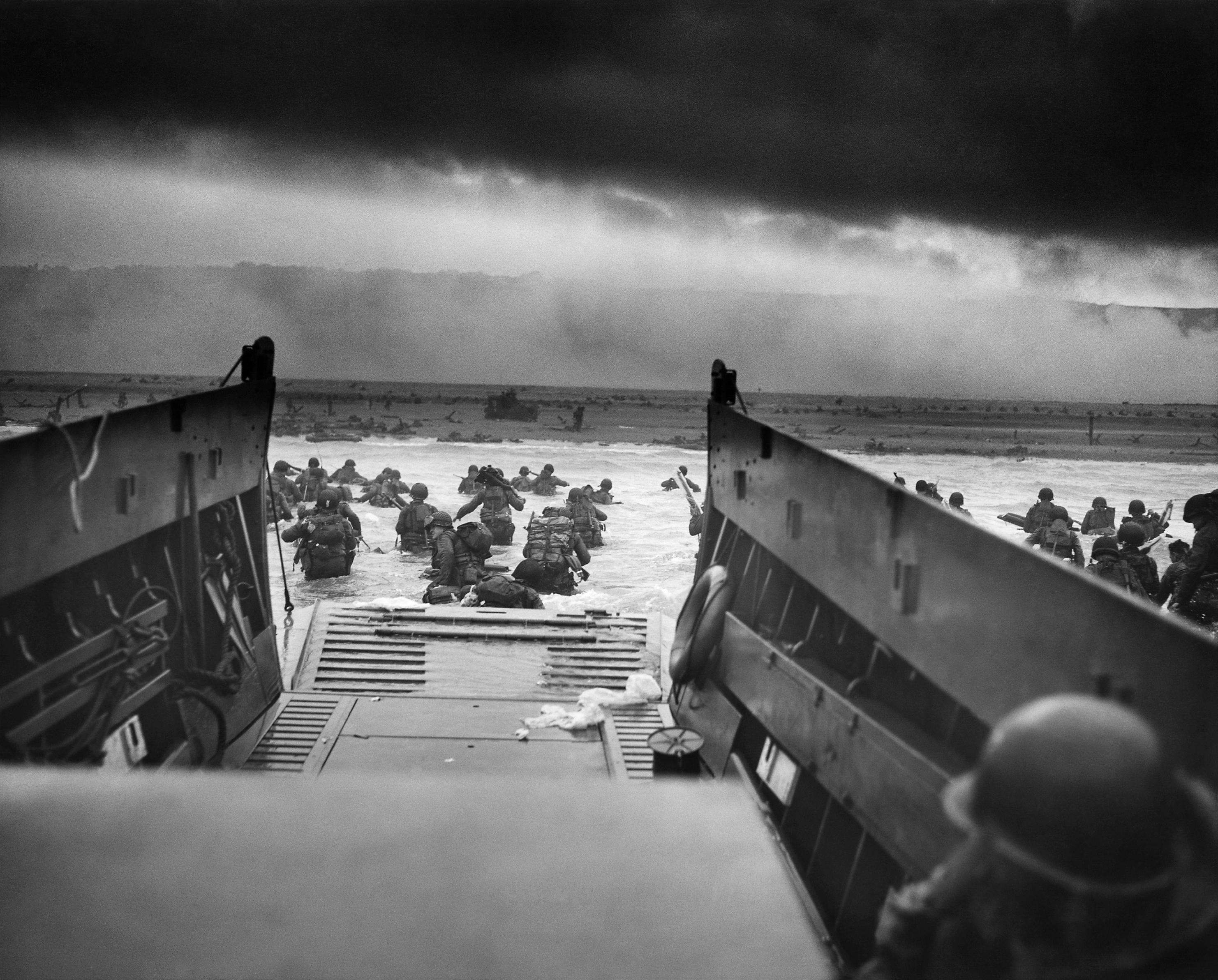
A LCVP (Landing Craft, Vehicle, Personnel) from the U.S. Coast Guard-manned USS Samuel Chase disembarks troops of Company E, 16th Infantry, 1st Infantry Division (the Big Red One) wading onto the Fox Green section of Omaha Beach on the morning of June 6, 1944. American soldiers encountered the newly formed German 352nd Division when landing. During the initial landing two-thirds of Company E became casualties.
History.com:
In November 1943, Adolf Hitler, who was aware of the threat of an invasion along France’s northern coast, put Erwin Rommel in charge of spearheading defense operations in the region, even though the Germans did not know exactly where the Allies would strike. Hitler charged Rommel with finishing the Atlantic Wall, a 2,400-mile fortification of bunkers, landmines and beach and water obstacles.
In January 1944, General Dwight Eisenhower (1890-1969) was appointed commander of Operation Overlord. In the months and weeks before D-Day, the Allies carried out a massive deception operation intended to make the Germans think the main invasion target was Pas-de-Calais (the narrowest point between Britain and France) rather than Normandy. In addition, they led the Germans to believe that Norway and other locations were also potential invasion targets. Many tactics was [sic] used to carry out the deception, including fake equipment; a phantom army commanded by George Patton and supposedly based in England, across from Pas-de-Calais; double agents; and fraudulent radio transmissions. Continue reading
Day ONE HUNDRED THIRTY-EIGHT of Presidential recovery.
Day ONE HUNDRED THIRTY-SEVEN of Presidential recovery.

 From IWM.ORG (Imperial War Museums)
The Germans knew that at some stage the Allies would launch a cross-Channel invasion, but they were unsure of exactly where or when it would take place. As a crucial part of their preparations for D-Day (6 June 1944), the Allies developed a deception plan to draw attention away from Normandy.
The D-Day deception plan was codenamed Operation ‘Fortitude’ and was part of a larger overall deception strategy – Operation ‘Bodyguard’. ‘Fortitude’ consisted of two parts: ‘Fortitude North’ was meant to fool the Germans into thinking that the Allies would launch an attack on Norway, and ‘Fortitude South’ was designed to convince the Germans that an invasion would occur north-east of Normandy in the Pas de Calais.


 | WeeWeed on General Discussion, Tuesday, M… |
 | czarina33 on General Discussion, Tuesday, M… |
 | texan59 on General Discussion, Tuesday, M… |
| WeeWeed on General Discussion, Tuesday, M… |
| WeeWeed on General Discussion, Tuesday, M… |
| WeeWeed on General Discussion, Tuesday, M… |
| texan59 on General Discussion, Tuesday, M… |
| texan59 on General Discussion, Monday, Ma… |
| texan59 on General Discussion, Tuesday, M… |
 | Lucille on General Discussion, Tuesday, M… |
| Lucille on General Discussion, Tuesday, M… |
 | auscitizenmom on General Discussion, Monday, Ma… |
 | Stella on General Discussion, Monday, Ma… |



 Stella's Place