81 years ago today, on Tuesday, June 6, 1944, the Allied invasion of Normandy began with Operation Overlord. Better known as D-Day , it was the largest seaborne invasion in history. The operation began the liberation of German-occupied northwestern Europe from Nazi control, and led to the Allied victory in the West.
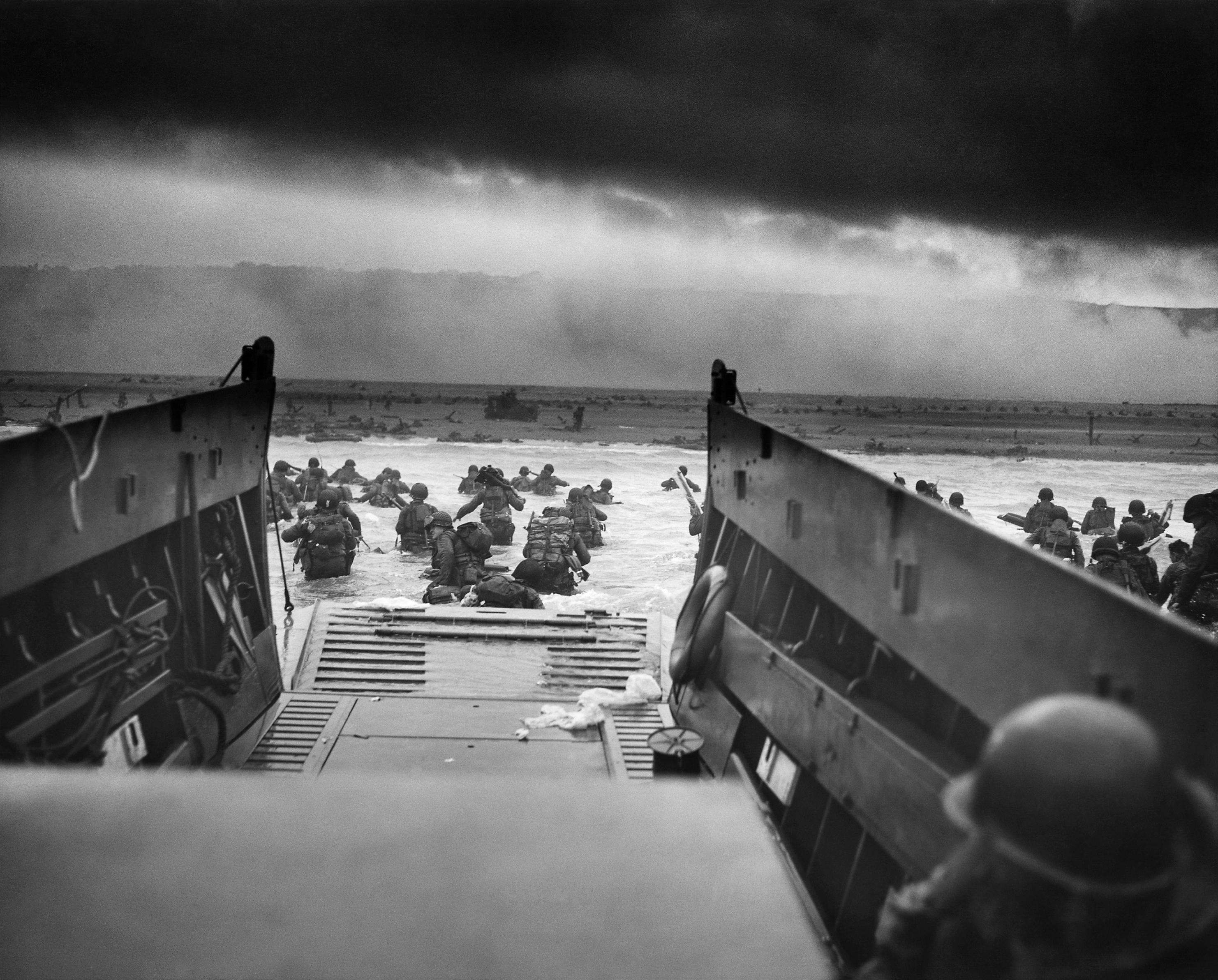
A LCVP (Landing Craft, Vehicle, Personnel) from the U.S. Coast Guard-manned USS Samuel Chase disembarks troops of Company E, 16th Infantry, 1st Infantry Division (the Big Red One) wading onto the Fox Green section of Omaha Beach on the morning of June 6, 1944. American soldiers encountered the newly formed German 352nd Division when landing. During the initial landing two-thirds of Company E became casualties.
History.com:
In November 1943, Adolf Hitler, who was aware of the threat of an invasion along France’s northern coast, put Erwin Rommel in charge of spearheading defense operations in the region, even though the Germans did not know exactly where the Allies would strike. Hitler charged Rommel with finishing the Atlantic Wall, a 2,400-mile fortification of bunkers, landmines and beach and water obstacles.
In January 1944, General Dwight Eisenhower (1890-1969) was appointed commander of Operation Overlord. In the months and weeks before D-Day, the Allies carried out a massive deception operation intended to make the Germans think the main invasion target was Pas-de-Calais (the narrowest point between Britain and France) rather than Normandy. In addition, they led the Germans to believe that Norway and other locations were also potential invasion targets. Many tactics was [sic] used to carry out the deception, including fake equipment; a phantom army commanded by George Patton and supposedly based in England, across from Pas-de-Calais; double agents; and fraudulent radio transmissions.
Eisenhower selected June 5, 1944, as the date for the invasion; however, bad weather on the days leading up to the operation caused it to be delayed for 24 hours. On the morning of June 5, after his meteorologist predicted improved conditions for the following day, Eisenhower gave the go-ahead for Operation Overlord. He told the troops: “You are about to embark upon the Great Crusade, toward which we have striven these many months. The eyes of the world are upon you.”
Later that day, more than 5,000 ships and landing craft carrying troops and supplies left England for the trip across the Channel to France, while more than 11,000 aircraft were mobilized to provide air cover and support for the invasion.
By dawn on June 6, thousands of paratroopers and glider troops were already on the ground behind enemy lines, securing bridges and exit roads. The amphibious invasions began at 6:30 a.m. The British and Canadians overcame light opposition to capture beaches code-named Gold, Juno and Sword, as did the Americans at Utah Beach. U.S. forces faced heavy resistance at Omaha Beach, where there were over 2,000 American casualties. However, by day’s end, approximately 156,000 Allied troops had successfully stormed Normandy’s beaches. According to some estimates, more than 4,000 Allied troops lost their lives in the D-Day invasion, with thousands more wounded or missing.
Less than a week later, on June 11, the beaches were fully secured and over 326,000 troops, more than 50,000 vehicles and some 100,000 tons of equipment had landed at Normandy.
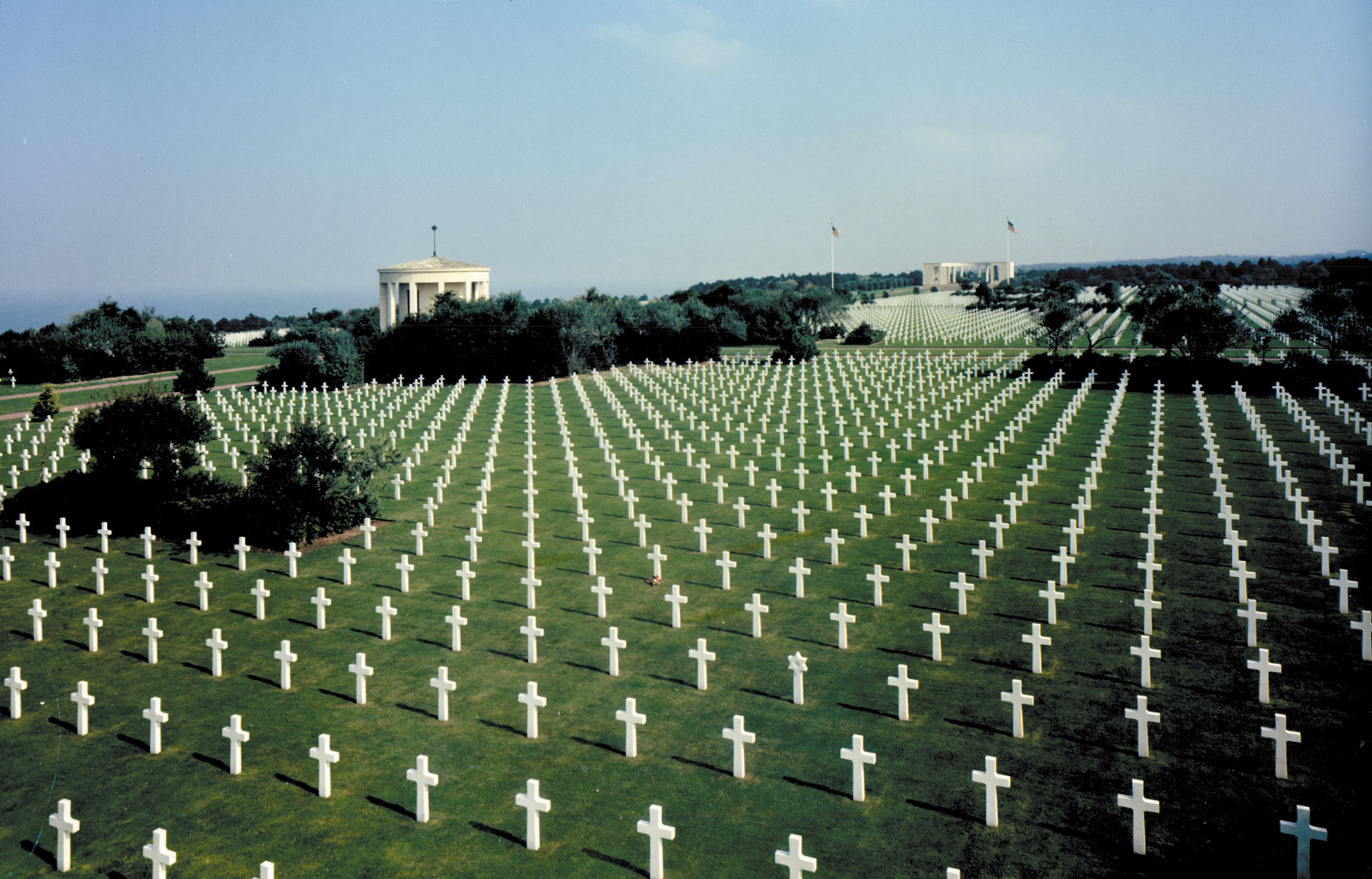
The Normandy American Cemetery, overlooking Omaha Beach and the English Channel, was established on June 8, 1944, as the first U.S. cemetery in Europe during World War II. It holds the graves of more than 9,300 U.S. servicemen who died in the D-Day invasion or subsequent missions.
 One of my favorite Reagan speeches, given on the occasion of the 40th anniversary of the Normandy invasion:




Some of the heroes were 4 legged.
Bing parachuted into Normandy on 6/6/1944 with Britain’s 6th Airborne Division. He served until the end of the war. He died of natural causes in 1955.
LikeLiked by 1 person
A few of the D Day Heroes who were more well-known.
Carlton Barrett: A private from New York who served in the 18th Infantry, 1st Infantry Division. Barrett saved American lives by bringing wounded soldiers to an evacuation boat despite heavy enemy fire, earning him the Medal of Honor.
Franklin D. Roosevelt Jr.: The oldest son of former President Theodore Roosevelt, he petitioned to be among the first U.S. troops to land in Normandy. At 56, he landed at Utah Beach and his valor and leadership inspired troops to reduce beach strongpoints with minimal casualties, earning him the Medal of Honor.
Ed Jackson: An American soldier who drove a tank after landing on Utah Beach. Though he survived D-Day, he felt his true heroes were the fallen soldiers and their families. Jackson’s story reflects the broader narrative of the Greatest Generation’s sacrifice and resilience.
A nurse who served on the Normandy beaches and received an MBE (Member of the Most Excellent Order of the British Empire)(for her dedication and service to the wounded. Her bravery and compassion exemplify the unsung heroes who supported the frontline soldiers. (No name was found on multiple searches…)
Richard Todd: An Irish-born actor who was part of the British Airborne invasion, tasked with opening communication routes for other Allied troops.
Photos and tributes for others who were there on D-Day.
https://helpforheroes.dedicationpage.org/ddayheroes
For a lighter touch, read the Norman Hewitt tribute at the bottom of the page.
LikeLike
D DAY HERO: The Lost Recording | His Story In His Own Words | Normandy WW2
LikeLike