The Battles of Lexington and Concord on April 19, 1775, were the first major military actions between the British Army and Patriot militias from British America’s Thirteen Colonies during the American Revolutionary War. The opposing forces fought day-long running battles in Middlesex County in the Province of Massachusetts Bay, in the towns of Lexington, Concord, Lincoln, Menotomy (present-day Arlington), and Cambridge.
In this first battle of the American Revolution, Massachusetts colonists defied British authority, outnumbered and outfought the Redcoats, and embarked on a lengthy war to earn their independence.
How It Ended
American victory. The British marched into Lexington and Concord intending to suppress the possibility of rebellion by seizing weapons from the colonists. Instead, their actions sparked the first battle of the Revolutionary War. The colonists’ intricate alarm system summoned local militia companies, enabling them to successfully counter the British threat.
Context
Thomas Gage was appointed Royal Governor of Massachusetts in 1774 and tasked by the British Parliament with stamping out rising unrest caused by restrictive British policies. Gage inflamed tensions between the colonies and the mother country and practiced harsh enforcement of British law. He drafted the Coercive Acts, a series of laws intended to punish colonists for deeds of defiance against the King, such as the Boston Tea Party.
By April 1775, Gage was facing the threat of outright rebellion. He hoped to prevent violence by ordering the seizure of weapons and powder being stored in Concord, Massachusetts, twenty miles northwest of Boston. But he underestimated the courage and determination of the colonists. Patriot spies got wind of Gage’s plan. On the evening of April 18, Paul Revere and other riders raised the alarm that British regulars were on their way to Concord. Minute Men and militias rushed to confront them early on April 19. Though it is uncertain who actually fired the first shot that day, it reverberated throughout history. Eight years of war followed, and those who stood their ground against Gage’s troops eventually earned independence from Britain and became citizens of the democratic United States of America.
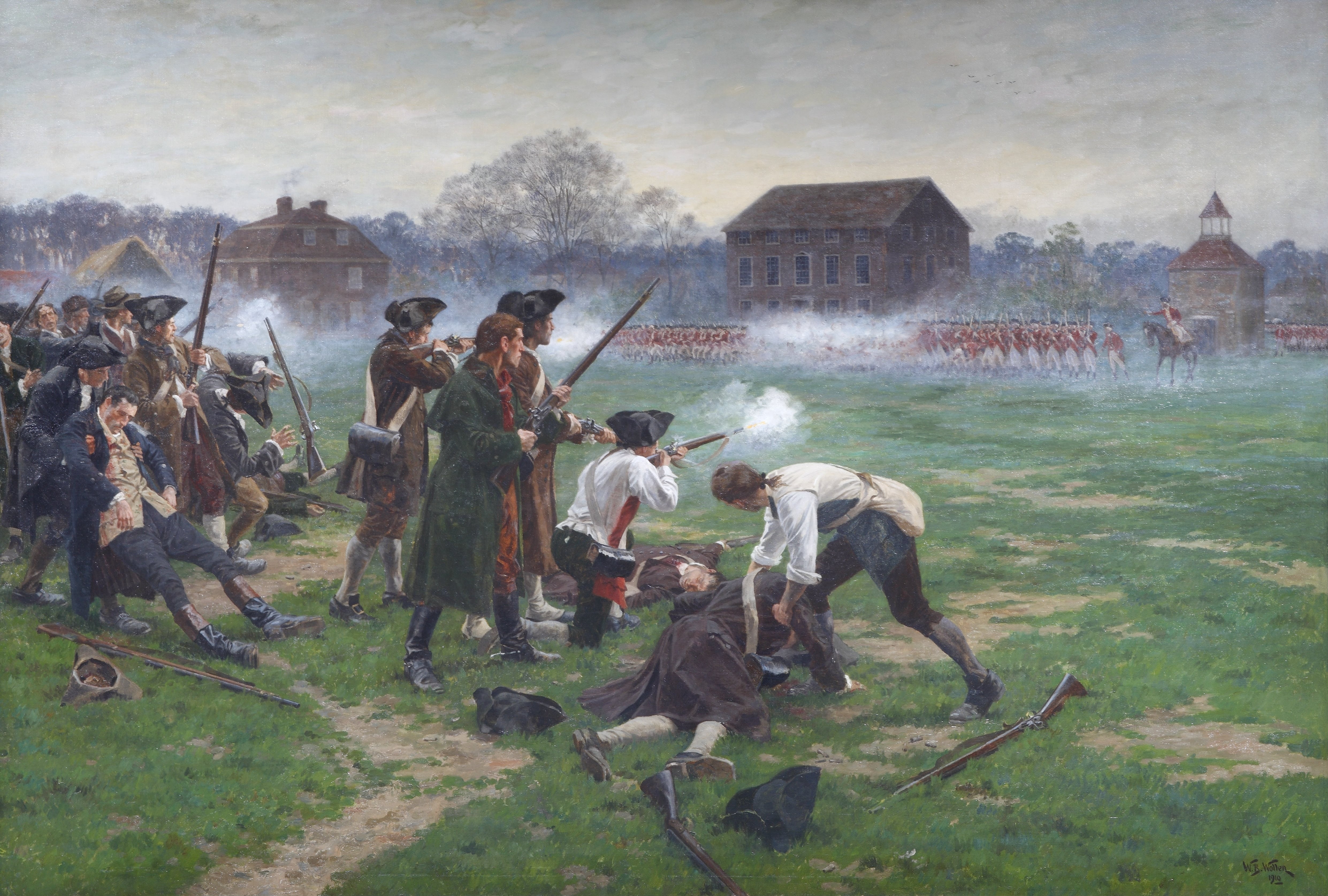
The Battle of Lexington
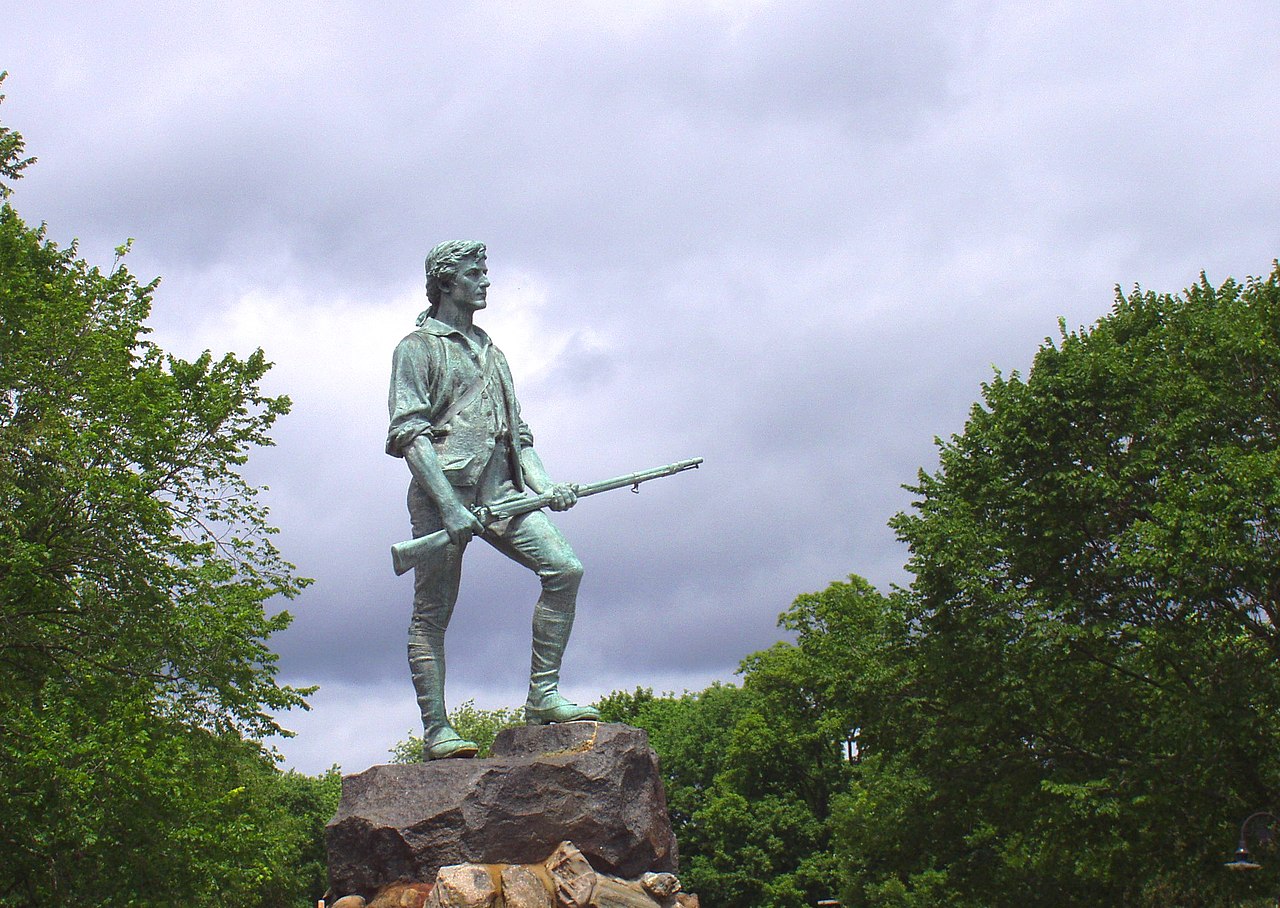
This statue is known as The Lexington Minuteman. It is by Henry Hudson Kitson and stands at the town green of Lexington, Massachusetts.