
May 1 is a very popular day!
When I hear the words “May Day”, I think of May poles, flowers and little girls in white dresses with crowns of flowers on their heads. Someone else I know says it reminds her of the smell of library paste and a May pole on the school grounds (why didn’t we have one of those at our school?) From a cursory search, I found out that this is common in England.
Wikipedia says that May Day on May 1 is an ancient northern hemisphere spring festival and usually a public holiday; it is also a traditional spring holiday in many cultures. Dances, singing, and cake are usually part of the celebrations that the day includes.
The name of the pagan festival in Great Britain that is celebrated on the same day is Beltane/Beltaine, or Bonfire Day. It is approximately half way between the Spring equinox and the Summer solstice, and is an important Gaelic festival. There is a modern version of this, called the Beltane fire festival, which is celebrated in Edinburgh, Scotland each year.
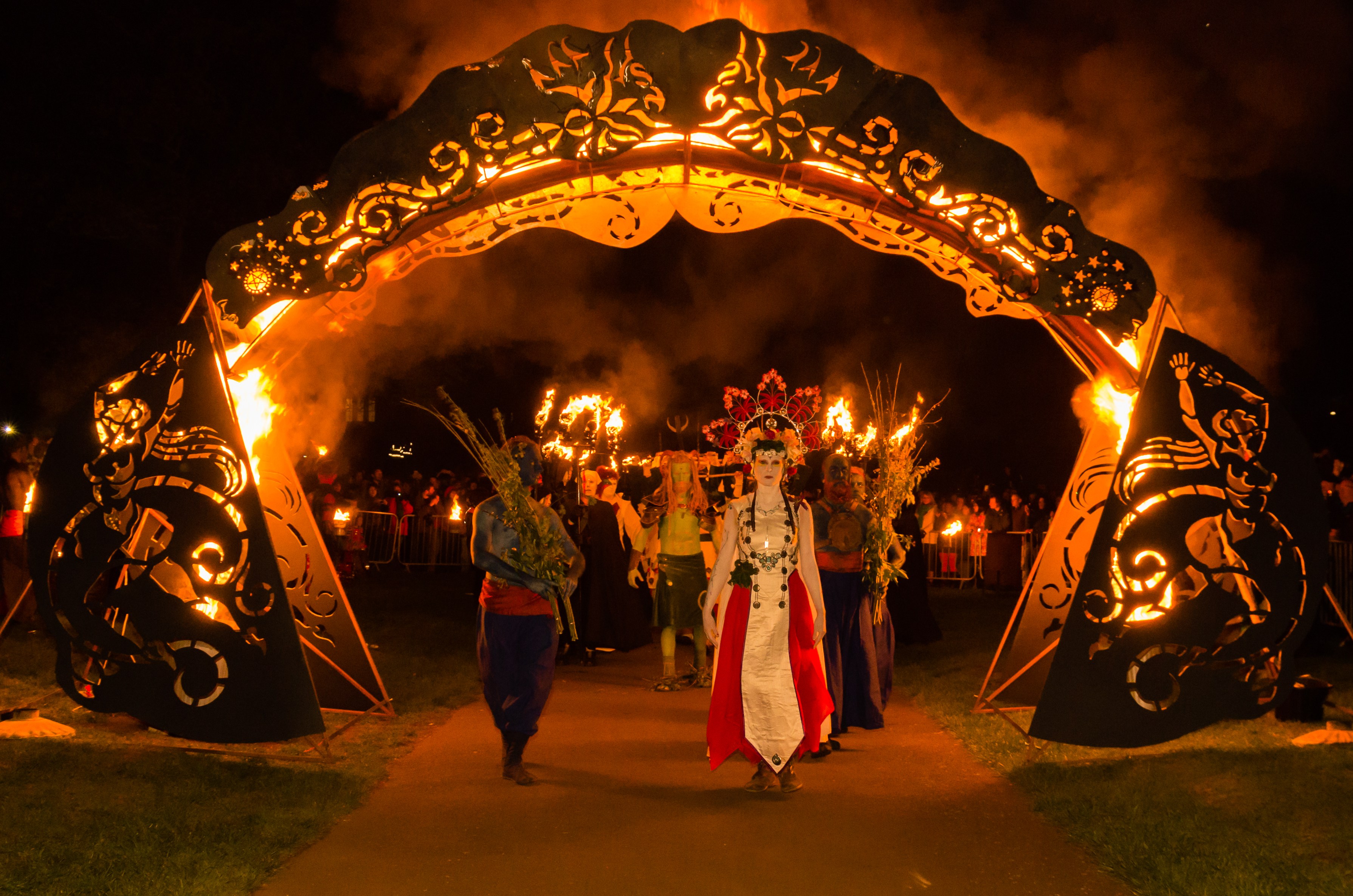
Copyright Mark.S.I.Taylor for Beltane Fire Society.
There are other, similar, festivals that have occurred throughout the world since ancient times.
In the 1900’s, Communists began to celebrate Worker’s Day on May 1. The date was chosen by an organization of socialist and communist political parties to commemorate the Haymarket affair, which occurred in Chicago on May 4 1886. In 1904 a call went out to “all Social Democratic Party organisations and trade unions of all countries to demonstrate energetically on the First of May for the legal establishment of the 8-hour day, for the class demands of the proletariat, and for universal peace.”
When I was in high school in the 1960’s, we observed “Law Day” on May 1 with a school assembly. In 1958, President Dwight D. Eisenhower declared May 1 to be Law Day in the United States. Its observance was later codified by Public Law 87-20 on April 7, 1961. My guess is that it was an answer to communist “Worker’s Day”. Eisenhower stated: “In a very real sense, the world no longer has a choice between force and law. If civilization is to survive it must choose the rule of law.”
There you have it. My five-minute history of May Day. Personally, I still prefer the little girls with flowers in their hair.
By the way, have you ever heard of Morris dancing? That is something that is done in England on May Day too. Apparently, there are all kinds, but Morris dancing is known to have been done at least as early as Elizabethan times in England.
However you decide to celebrate May day, take care, don’t over do, and – whatever you do – don’t accidentally set yourself on fire!




 Stella's Place
LikeLike
For me it was always “Pops” birthday, he would have been 96 today.
LikeLiked by 2 people
May Day will always be a pleasant reminder of the start of Spring.
Mayday also is used as a universal call of extreme distress.
Completely unrelated to injuries in bonfires and communist rallies.
I will also now remember it as “Law Day” and the Eisenhower quote.
“In a very real sense, the world no longer has a choice between force and law. If civilization is to survive it must choose the rule of law.”
Given that the true “rule of law” is not dictated by the lawless evil for their own purposes.
LikeLike