 TaraRoss.com:
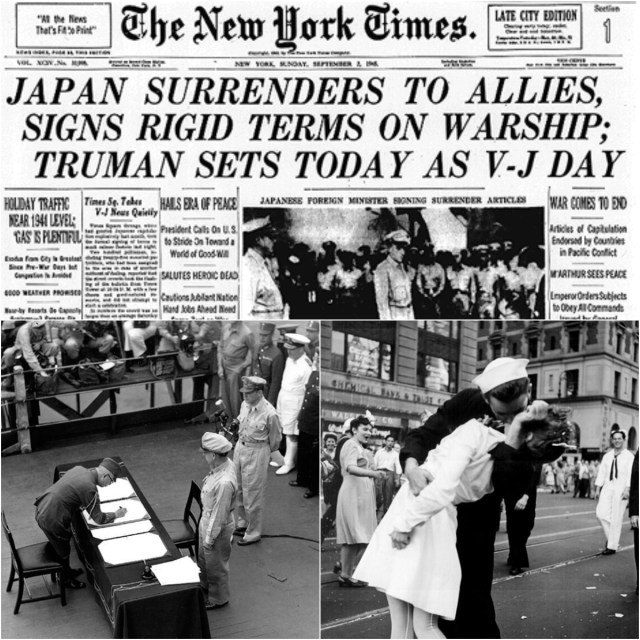
On this day in 1945, a formal surrender ceremony is held aboard the USS Missouri. Today is the anniversary of V-J Day! On this day, World War II effectively came to an end.
It had been less than a month since the bombings of Hiroshima and Nagasaki.
The bomb dropped on Hiroshima had been devastating, of course. But the second bomb dropped on Nagasaki was—if anything—even worse. That plutonium bomb produced an explosion 40 percent bigger than the uranium one dropped on Hiroshima.
Perhaps unsurprisingly, then, the bombs prompted the Japanese government to consider surrendering—but it still wasn’t willing to do so unconditionally! Instead, it sought to ensure that such a document would not “compromise any demand which prejudices the prerogatives of His Majesty as a sovereign ruler.” Nevertheless, President Harry Truman ordered a halt to the atomic attacks so negotiations could commence. Truman’s Secretary of Commerce later reported that Truman really didn’t want to “wip[e] out another 100,000 people . . . . He didn’t like the idea of killing, as he said, ‘all those kids.’”
By August 12, the Japanese government had the American reply: The United States would accept surrender, but any future government of Japan must be established by the “freely expressed will of the Japanese people.”
Negotiations dragged on much too slowly. The Japanese government still didn’t answer right away! The “days of negotiation with a prostrate and despised enemy,” a British ambassador later said, “strained public patience.”
That seems like a bit of an understatement!
When the Japanese government failed to respond, conventional bombings resumed. The United States continued to prepare a third atomic bomb, just in case it was needed. And it did something else: The United States began dropping leaflets across Tokyo. The leaflets described the terms that had been offered for ending the war.
You don’t think surrender was going to be easy, even after all this, do you? It wasn’t, of course. In Japan, there was one last attempt to stop the surrender. A handful of officers attempted a coup, but they were discovered. In the end, many of those involved in the coup attempt committed ritual suicide.
Finally, on August 15, the emperor made an announcement on public radio: Japan would surrender. It was the first time that many Japanese people had ever heard their Emperor’s voice. Can you imagine that?
The formal surrender ceremony occurred aboard the USS Missouri on September 2. The ceremony lasted for 23 minutes. General Douglas MacArthur accepted and signed the Japanese surrender as Supreme Commander for the Allied Powers. Admiral Nimitz and representatives from other nations also signed the document.
Terms of a final treaty would still need to be negotiated, of course. But, for all intents and purposes, World War II was finally over.
Tara Ross is worth your visit on a regular basis. http://www.taraross.com/
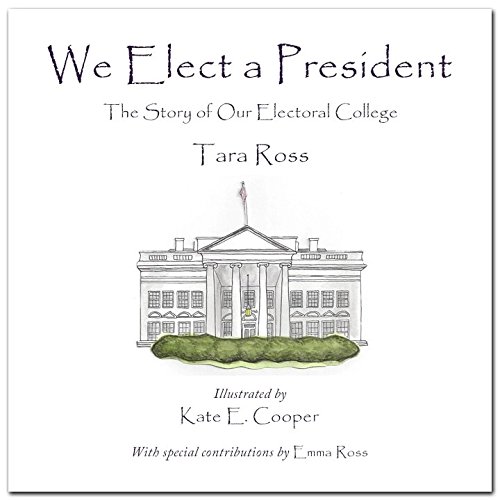
Tara Ross has a Facebook page as well, and she has a new book coming out, on September 12, 2016. It is intended for young students, but I hear it is interesting for anyone interested in the reasons for the Electoral College and why our Founders chose it.



 Stella's Place
The first bomb didn’t convince the Jaoanese Supreme War Direction Council to surrender, they didn’t want to surrender unless they had certain guarantees about Japan’s future. On the 8th of August, 1945, Russia finally declared war on Japan and invaded Manchuria, hitting the Japanese troops months before they expected a Russian attack. The second bomb on the day after the Russian entry into the war more or less convinced the Council to pull the plug.
As the story goes the military didn’t want to end the war though, a group planned on foiling the Council’s plans by kidnapping the Emperor. They made their move on the night of 14-15 August but failed to convince the High Command and Imperial Guard to go along so the plot failed and the next day Japan’s letter of surrender was delivered.
LikeLiked by 2 people
BTW, there’s also a story that one of the things that helped the plot to kidnap the Emperor fail was that an errant bomb from one of the last B-29 bombing raids on Tokyo hit and killed some of the plotters. In all, the end of the Pacific war looked to have had either one of history’s major confluences of coincidences or Divine intervention.
LikeLiked by 2 people
Many years ago, had read the Japanese leaders had thought the destruction from the first bomb was a natural disaster. Then somebody said “watch this”. And that was it for the A-bombs. Probably would have taken another 4-8 months to build one. I have often wonder what profane laced comment came out of Truman’s mouth after watching the tape recordings of the blast/aftermath…….
LikeLiked by 1 person
Those two were it, it would havevtaken a while tongin up more fissionable materials. Had they notvworked it would have been a sea landingbthat would have caused massive casualties on both sides. Japan at that time was down but notbout, the Russian invasion of Manchuria on the 8th pitted 1.5-million Russian troops against some 700,000 Japanese and 170,000 Manchukuo troops, you can see the Japanese still had potential and had not Russia locked it up things could have gotten dirtier still.
LikeLike