
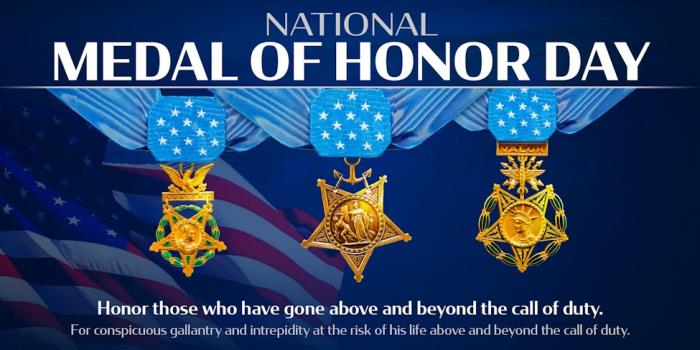
National Medal of Honor Day, held annually on March 25th, was established by Congress to recognize those who have been awarded the United States’ highest military decoration for valor in action.
- The Medal of Honor is the highest military award. It is given to military members, often posthumously, for “conspicuous gallantry and intrepidity at the risk of life above and beyond the call of duty.” The Medal of Honor is awarded by the U.S. president, typically during a formal ceremony at the White House.The Medal of Honor has been awarded more than 3,500 times to members of the Army, Air Force, Navy, Coast Guard and Marine Corps. While the medal is earned in recognition of specific actions, it’s never considered “won.”
- Although more rarely awarded today, the award has been used more liberally in the past. For example, more than 40% of Medal of Honor awards occurred during the Civil War or in the several years after the award was originally created in 1861.
A small number of service members have received the Medal of Honor twice, all for actions during or before World War I. Theodore Roosevelt is the only president to have been awarded the Medal of Honor. He was given it posthumously in 2001 in recognition of his actions during the Spanish-American War 100 years prior.
Dr. Mary Walker, a civilian who served with the Army during the Civil War, is the only female Medal of Honor recipient.
While the requirements for the Medal of Honor have changed over time, it has been primarily reserved for military members only. The only exception, Dr. Mary Walker, was a civilian who worked for the U.S. Army during the Civil War at a time when women were not permitted to join the military.
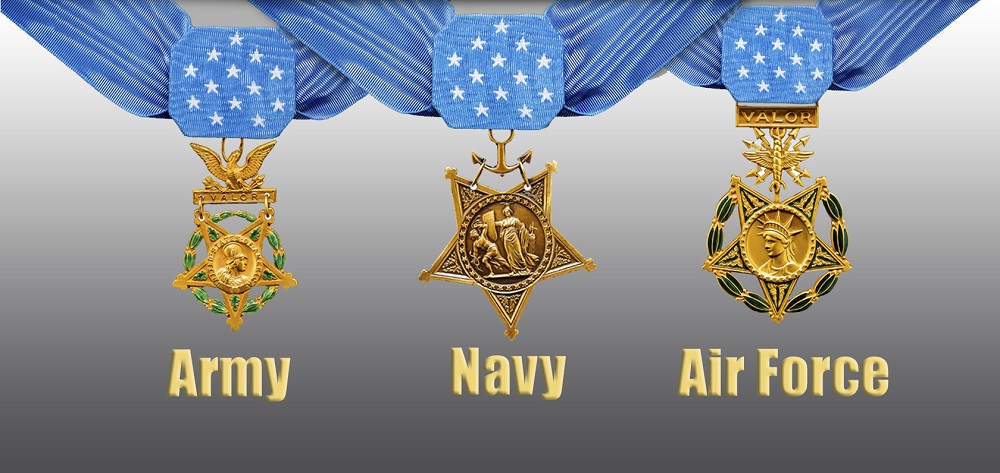
As of 1963, the Air Force, Department of the Navy and Army have the same criteria for how an individual qualifies for consideration.
The law states that the medal is meant to recognize someone who “distinguished himself conspicuously by gallantry and intrepidity at the risk of his life above and beyond the call of duty.” It also says that the act of valor must occur in one of the following circumstances:
- While engaged in action against an enemy of the United States.
- While engaged in military operations involving conflict with an opposing foreign force.
- While serving with friendly foreign forces engaged in an armed conflict against an opposing armed force in which the United States is not a belligerent party.




 Stella's Place