
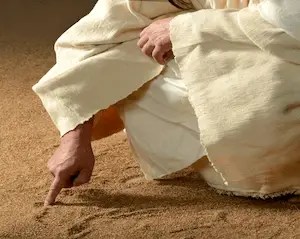
The only question remaining is, has the moving finger irrevocably moved on?
The Moving Finger writes; and, having writ,
Moves on: nor all thy Piety nor Wit
Shall lure it back to cancel half a Line,
Nor all thy Tears wash out a Word of it.
– The Rubaiyat of Omar Khayyam, Stanza 71
Numerous authors are opining on the validity or invalidity of the pardons issued under the autopen signature of the invalid who was housed in the White House for the better part of four years (when he wasn’t on the beach with his ice cream cone). Andrea Widburg has ably discussed this issue as illuminated by Biden’s interview with the New York Times. The problem now is, “What can we do about it?” Or, in other words, “What difference does it make?”
Acts that use a Presidential signature include letters and proclamations. No one is seriously suggesting that we go through that stack of stuff to somehow invalidate them. Proclamations are ceremonial, and letters are – well – letters. They fall into the legal “Who cares?” category.
The next group are executive orders. These are orders to the executive branch of the government to do one thing or another, and can readily be rescinded by the next President with the stroke of a pen.
[. . .]
As noted above, autopen pardons are quite possibly invalid, leaving people like Anthony “I am science” Fauci open to criminal liability for perjury. Senator Rand Paul obviously thinks so, since he has referred Fauci to the DOJ for prosecution – again. But what about Biden’s appointments? Our gaze turns to the shiny object in the room, judges. They are the class of appointed officers who remain after the changing of the guard every four years.
Before you get all giddy about the prospect of getting rid of that Supreme Court Justice who can’t be sure that she’s a woman, recall that Sleepy Joe made multiple public comments about her nomination prior to Senate confirmation. We can have no doubt that her selection had his direct approval. Autopen or no, we’re stuck with her. But there are a number of other judges that we may not have to suffer with for extended periods. Unfortunately, the path I’m shining a light on is not entirely certain.
Biden’s NYT interview points to a key flaw in the autopen. He may have given his subordinates basic direction about what should be done. That general instruction was passed on from sycophant to sycophant in what may best be described as a game of “Telephone.” The relationship between the original intention and the final execution was tenuous at best. During the last two years of Joe’s tenancy at 1600 Pennsylvania Avenue, his Chief of Staff, Jeffrey Zients, created the actual order for each signature.
This is different from proper practice. First, the final approval did not come from the President. It is clear from case law all the way back to the Founding that the President’s signature is the “last act” that indicates the President’s actual intent (Marbury v. Madison, 5 US 137, 1803).
Without the President’s personal involvement in this final act, conservative scholars Edwin Meese and Josh Blackman argue that strict personal involvement is required. The Appointments Clause establishes that the President must make a clear statement that a given person is appointed to a judgeship (or granted a pardon, etc.). It does not allow a secretary, aide, or Chief of Staff to exercise that authority.
Thus, once the choice of a judge is suggested by the President’s staff, he has to give that person the nod. Then the name can go to the Senate for confirmation. It’s not clear that this happened for all of Biden’s judicial nominations.
[. . .]
Left-wing legal briefs will all claim that since the Senate confirmed them, all is sunshine and roses. Obviously, this has not been adjudicated. On the other hand, they have occupied judicial robes for a period of time, during which they made numerous rulings. If they are dispossessed of their chambers, what happens to the work they have already completed?
There is a simple answer for this in the “de facto officer” doctrine. This settled law states that, even if an officer was not properly elevated and installed in office, the acts of that “not” officer remain official. The new, properly nominated and confirmed judge would then hear the cases moving forward. Any erroneous acts by the prior judge would have to be reversed in the normal course of appeals.
Unfortunately, this simplified outline of possible problems must meet a significant standard of proof. Without a clear chain of evidence showing that Biden did not appoint a particular judge, courts will likely find that the appointment was valid. But if there’s more evidence that follows the NYT story, it’s possible that courts will find a pattern that, absent a direct confirmation of presidential intent that a particular judge is improperly in office, and must be removed. We can only hope.




 Stella's Place