
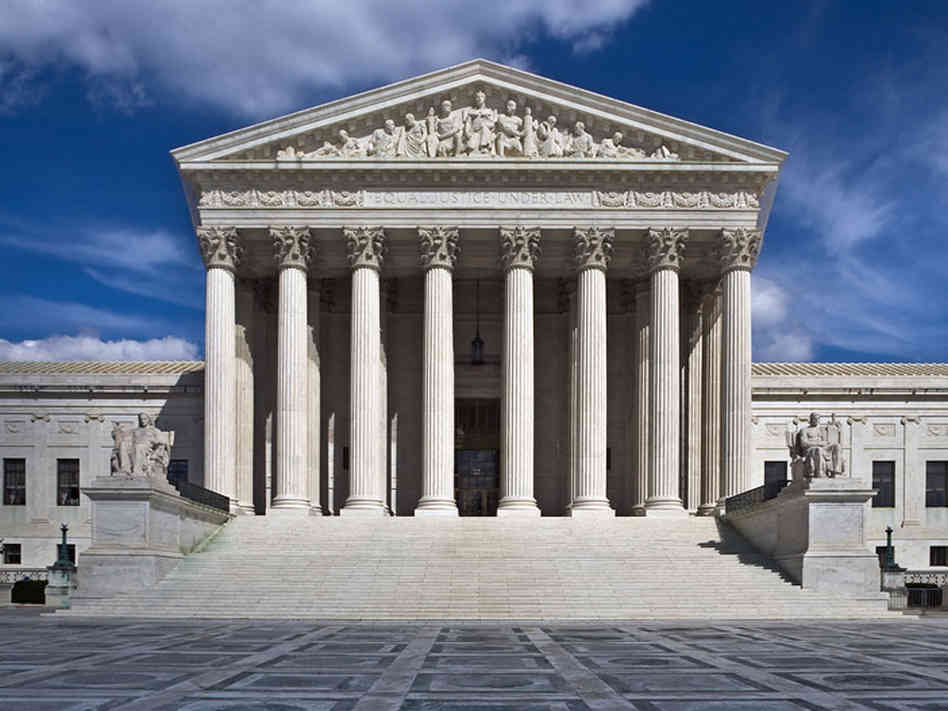
The Supreme Court is heading into its summer recess, which means that the justices will be issuing a series of hotly-anticipated decisions throughout June. These decisions could yield significant precedents that ripple through the national political environment, affecting congressional and executive agendas alike.
So far, the court has already released rulings on electronic cigarettes, a deportation case, ghost guns, and TikTok.
Here are the decisions to look out for as the term comes to a close.
1. ‘Gender-Affirming Care’ for Minors
In December 2024, the justices were called upon to enter the gender debate by hearing arguments over Tennessee’s attempt to prevent “gender-affirming care” from being provided to minors. The case focused on the use of cross-sex hormones and puberty blockers, rather than surgical procedures, but raised constitutional questions common to both sets of procedures. […]
2. Nationwide Injunctions, Birthright Citizenship
Lawsuits challenging President Donald Trump’s agenda have led to federal judges issuing injunctions on a range of policies. In turn, the administration has accused these judges of overstepping their authority, sparking a debate about the separation of powers. […]
3. Sex and Gender in School Libraries
Parents sued the Montgomery County School Board in Maryland after it determined that parents could not opt their children out of book readings with controversial content about gender and sexuality. The policy mandated new “LGBTQ-inclusive” storybooks for elementary school students that promote gender transitions, Pride parades, and same-sex romance between young children. […]
4. Obamacare Preventive Care Panel
In Kennedy v. Braidwood Management, Inc., the Supreme Court considered the constitutionality of the federal Preventive Services Task Force, which was created under the Affordable Care Act (former President Barack Obama’s health care law, known as Obamacare) and makes binding recommendations about preventive medical services.
Members of the task force are appointed by the secretary of the Department of Health and Human Services, but the U.S. Court of Appeals for the Fifth Circuit said doing so violates the Constitution’s Appointments Clause, which allows the president to appoint officers to assist him in carrying out his responsibilities. Such officers must be appointed by the president and confirmed by the Senate. […]
5. Age Verification for Pornography Websites
As politicians at the federal level attempt to regulate the digital adult entertainment industry through policies such as mandatory online age verification, Texas has passed a law requiring just that.
The U.S. Court of Appeals for the Fifth Circuit upheld the law, stating that it did not violate the First Amendment. An adult entertainment industry group, Free Speech Coalition, asked the Supreme Court to intervene.
In Free Speech Coalition v. Paxton, the coalition argued at a January hearing that the appeals court should have applied a stricter standard, a legal test known as heightened scrutiny, when assessing whether the law accorded with the First Amendment. […]
6. Medicaid Funding for Planned Parenthood
Abortion returned to the Supreme Court this term with Medina v. Planned Parenthood South Atlantic, a case about Medicaid funding for Planned Parenthood, which provides abortions as well as birth control and pregnancy testing. In April, the justices heard arguments over South Carolina’s attempt to exclude the abortion provider from its state Medicaid program. […]
7. Mexico’s Lawsuit Against Gun Companies
U.S. gun manufacturers have asked the Supreme Court to quash a lawsuit brought by the Mexican government, which alleged that U.S. companies were liable for guns being used in violence committed by criminal cartels in Mexico.
Although the U.S. Court of Appeals for the First Circuit allowed the lawsuit to proceed, the Supreme Court seemed skeptical during oral arguments in March that Mexico had shown that the companies were liable under the federal Protection of Lawful Commerce in Arms Act, which generally protects firearms companies from lawsuits based on criminals misusing their products. […]
8. Palestinian Terrorists
In two consolidated cases—Fuld v. Palestine Liberation Organization and United States v. Palestine Liberation Organization—the Supreme Court justices considered whether the families of terror attack victims could sue the Palestine Liberation Organization (PLO) terrorist group. In April, the Supreme Court seemed to lean toward upholding the federal Promoting Security and Justice for Victims of Terrorism Act, which empowers Americans harmed by terrorist attacks abroad to sue in U.S. courts. […]
9. Nuclear Waste Storage
Texas objected to the federal Nuclear Regulatory Commission’s attempt to license private storage providers to operate an interim storage facility in the Permian Basin, which is the nation’s most productive oil field. The state said the proposed location could jeopardize the oil field.
Texas sued, and the Supreme Court took up the Nuclear Regulatory Commission v. Texas case after the state won in the U.S. Court of Appeals for the Fifth Circuit. Judges there said the federal Atomic Energy Act does not authorize the commission to give a private business a license for an interim storage facility. The federal government told the Supreme Court that the Fifth Circuit’s decision imposed “novel limits” on the commission’s licensing powers and upended a “44-year-old regulatory framework for licensing storage of spent fuel.” […]




 Stella's Place