
Author: Robert W. Malone, MD, MS
Incompetence vs Malice. It’s always hard to differentiate.
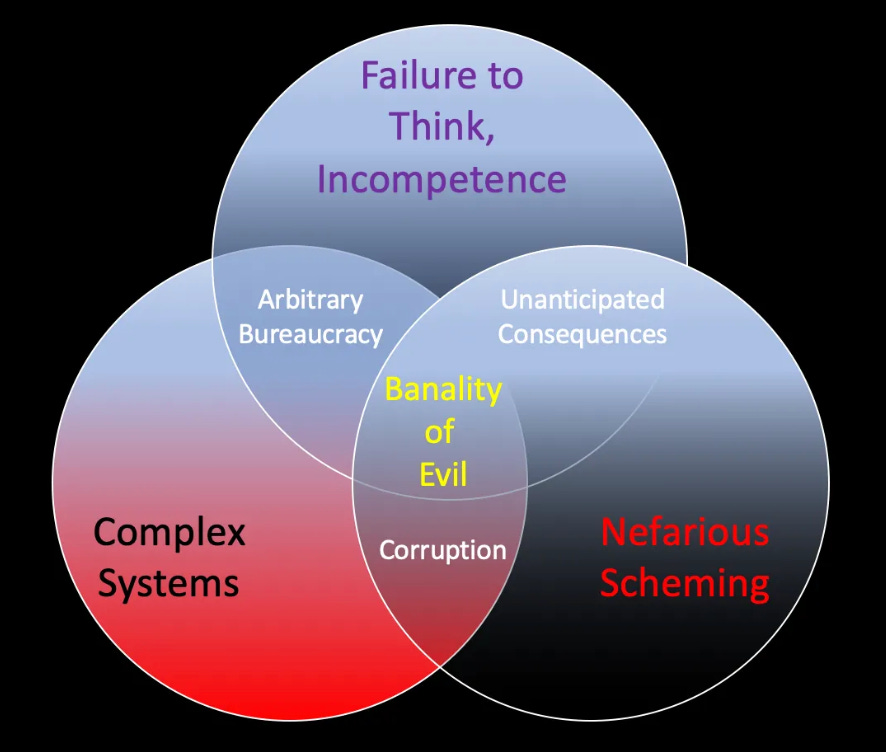
I am on a large boat resting at anchor in shallow water off the coast of Poros, Greece. It is perfect weather for swimming. And all I can think about is how to make sense of the stream of events and information that have emerged over the last three days since the attempt to take Trump’s life. What does this mean, and what consequences will flow from this brief moment?
All who routinely read this substack know that, when attempting to make sense of data, I am guided by the method of multiple working hypotheses. I aspire to avoid simple explanations (single theories or strong inferences) for that which I cannot prove. This training and bias helped me navigate the COVID crisis to a reasonable approximation of truth. These concepts are now guiding me through the massive amount of primary information (data) coming at all who participate in “X” regarding the attempted assassination of President and candidate Donald Trump.
Once again, Tucker Carlson has provided a succinct summary of the big picture.

What has happened is evil in so many different ways. Although details of the shooter and his motivations remain obscure, what cannot be denied is that this evil flows from many sources, multiple streams joining to form a river, which becomes a river of tears for our country. Tucker has made one prediction, but I see opportunity and tragedy intertwined. My fear is shared by many, who often use the term “Civil War” to express that fear.
As an aside, at least some immediate good has come out of this horrible series of events. The Biden administration was shamed into doing at least one right and proper thing.
 |
[. . .]
The Concept of Banality
The concept of the banality of evil is often misunderstood as suggesting that evil is ordinary or common. However, Arendt’s intention was to highlight the fact that evil is not necessarily driven by a desire for destruction or chaos, but rather by a lack of thought and consideration for the consequences of one’s actions.
In this sense, the banality of evil refers to the fact that evil can be committed by ordinary, unremarkable people who are not driven by a desire for evil, but rather by a lack of moral imagination and a failure to think critically about the consequences of their actions.
Implications of the Banality of Evil
The concept of the banality of evil has significant implications for our understanding of morality and ethics. It suggests that evil is not necessarily the result of a desire for destruction or chaos, but rather the result of a lack of thought and consideration for the consequences of one’s actions.
This concept also highlights the importance of critical thinking and moral imagination in preventing evil. It suggests that individuals must be able to think critically about the consequences of their actions and consider the potential impact on others in order to avoid committing evil.
Read the rest HERE.




 Stella's Place
A fight between good and evil no doubt.
LikeLiked by 2 people