
If you watch British television, you will know that they have many historical programs about just about everything. One topic that keeps coming up is how humans have dealt with their excrement and urine through the ages, including its many uses. If you think that we are good at recycling, believe me we have nothing on the Tudors and the Stuarts!
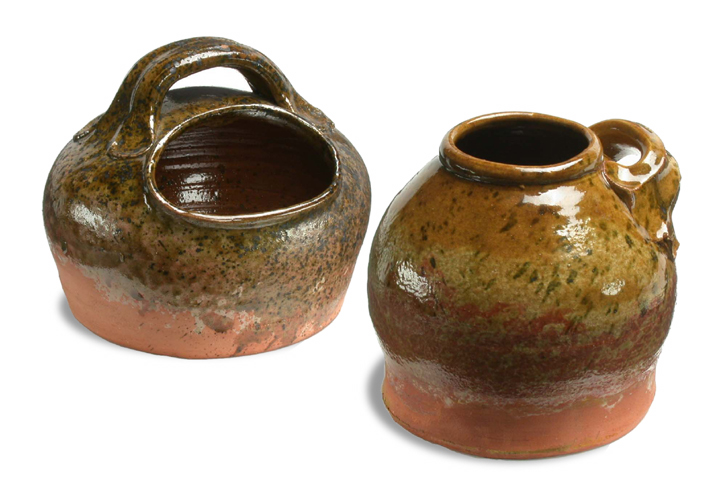 Urine used to be considered quite a commodity. If you allow it to go stale, it becomes ammonia, which was used for laundry stain removal. It was made into saltpeter, used in fireworks, gunpowder, paint stripper, paint pigment and fertilizer. Urine was used in the tanning industry to soften leather, and as a mordant to “fix” dye in cloth.
Urine was also used to full wool cloth. Fulling, also known as tucking or walking (spelled waulking in Scotland), was a step in woollen cloth making which involves cleansing to eliminate oils, dirt, and other impurities, and to make it thicker (felting). Ammonium salts in stale urine assisted with this task. The worker who does the job is called a fuller, tucker, or walker.
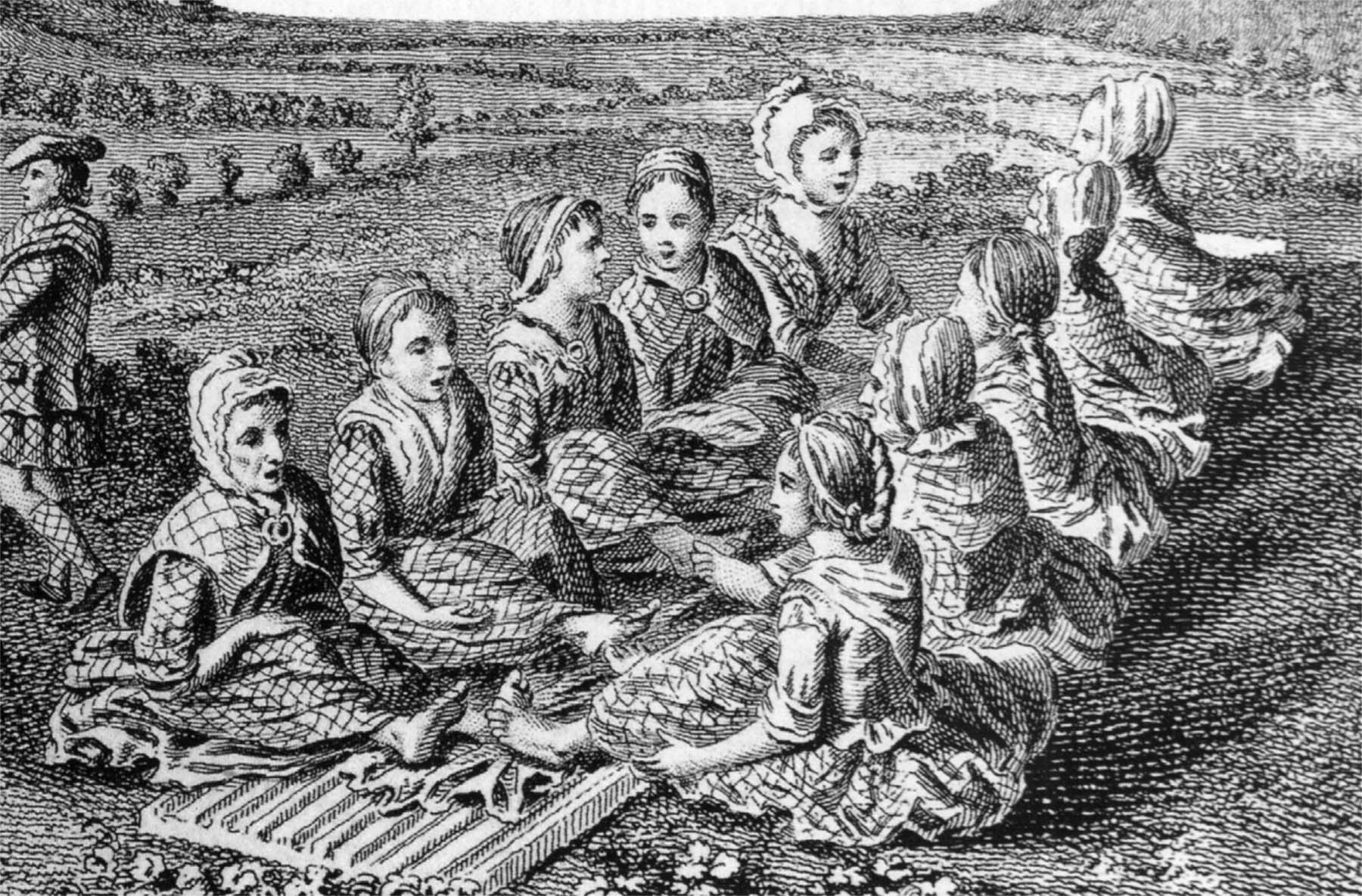
Engraving of Scotswomen singing a waulking song while walking or fulling cloth, c. 1770.
There were people who had the job of collecting the contents of piss pots at taverns, and “night soil men” who emptied cesspits.
A gong was a term that was used for both a privy and its contents. Gong farmer (also gongfermor, gongfermour, gong-fayer, gong-fower or gong scourer) was a term that entered use in Tudor England to describe someone who dug out and removed human excrement from privies and cesspits. It was sometimes used as fertilizer. More about this can be found at Wikipedia:
Despite being well-rewarded, the role of gong farmer was considered by historians on television series The Worst Jobs in History to be one of the worst of the Tudor period. Those employed at Hampton Court during the time of Queen Elizabeth I, for instance, were paid sixpence a day—a good living for the period—but the working life of a gong farmer was “spent up to his knees, waist, even neck in human ordure”. They were only allowed to work at night, between 9pm and 5am. They were permitted to live only in specified areas. And they were sometimes overcome by asphyxiation from the noxious fumes produced by human excrement.
Gong farmers usually employed a couple of young boys to lift the full buckets of ordure out of the pit and to work in confined spaces.
After being dug out, the solid waste was removed in large barrels or pipes, which were loaded onto a horse-drawn cart. As privies spread to the residences of ordinary citizens they were often built in backyards with rear access or alleyways, to avoid the need to carry barrels of waste through the house to the street.
The history of toilets is quite interesting. From Roman times right up to medieval times, using the toilet was not really a private activity. As reported in PORCH,
It’s true that the most powerful or wealthy may have been able to use the toilet in relative privacy. But for the lower or middle classes, nearly all aspects of life was commonly shared. Like we explored in the history of the bedroom and kitchen, shared activities was a way to foster relationships, establish bonds and share communal life.
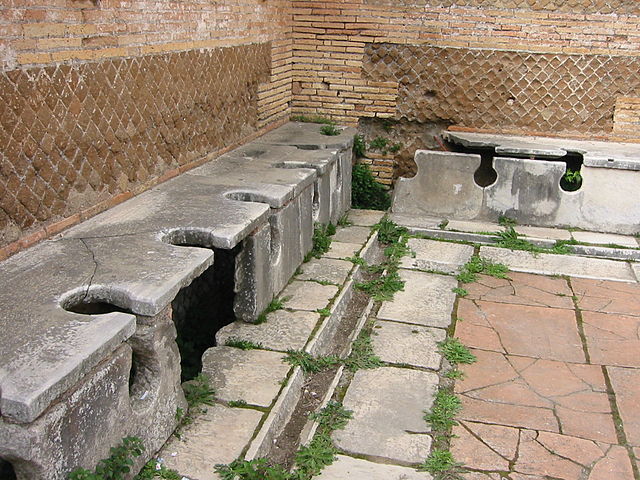
Roman public toilet
There were basically three types of toilets in the Tudor period and who used them was decided entirely upon the status of that person. There were Great Houses of Easement or communal privies, which were public toilets for the lower class. These toilets, like the ones before them, were often situated over rivers and enclosed in a bridge-like structure. Chamber pots were used by the middle class and would have been emptied onto the street or river.
The wealthy royals used velvet-lined clothes stools [I believe the term is actually “close stool”] with a chamber pot inside. They would be attended by servants who would bring the clothes stool to the person and then wheel them out when finished. Queen Elizabeth I even had a carriage for her clothes stool so that it could be brought with her wherever she went.
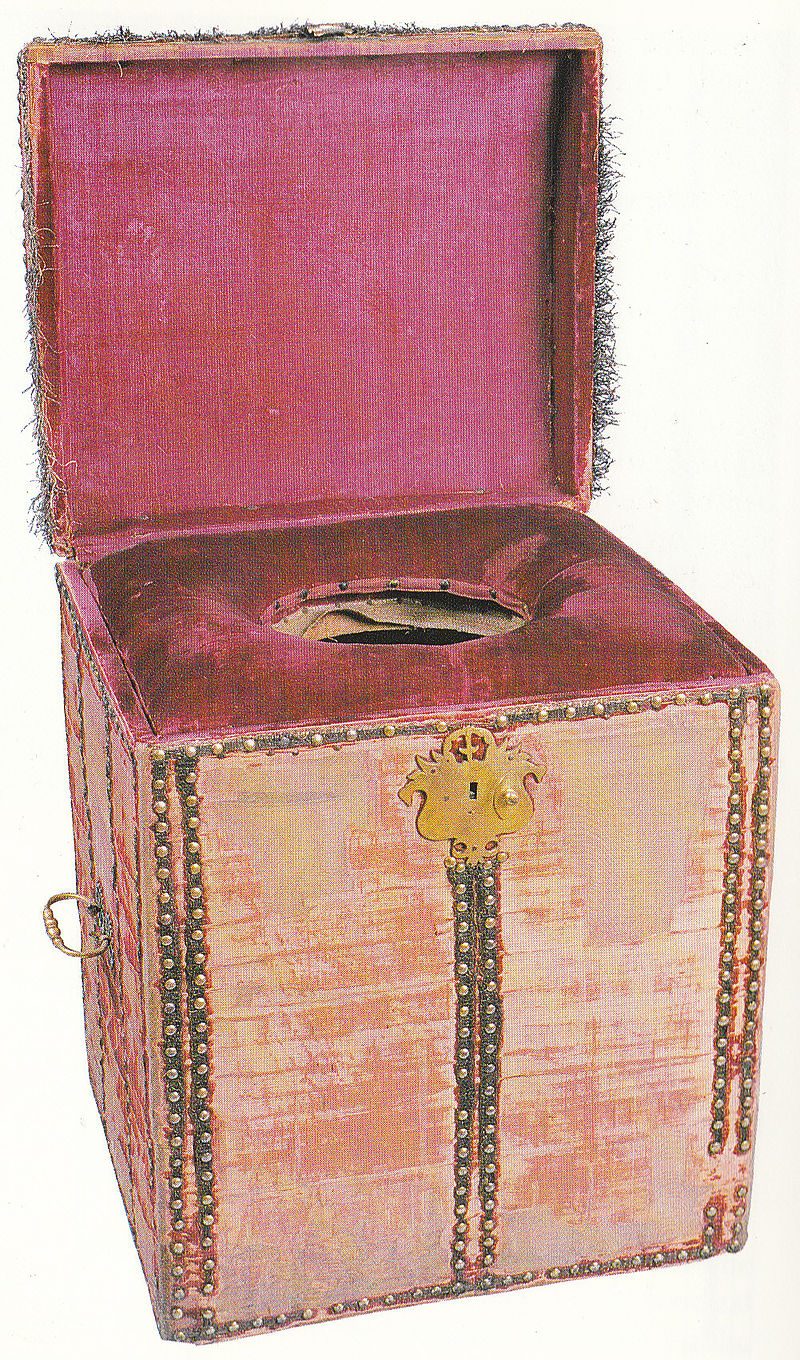
Close Stool
This is a really interesting and detailed article. Good read! Be sure not to miss what they used for toilet paper back in Roman and medieval times. In the 19th and early 20th century, you might find scrap paper available in the outhouse, like pages from the Sears catalog, or even corn cobs. I’ve heard it said that advertisements or other scrap paper used to be called “bum fodder” in England.
Real flushing toilets with functional sewage systems did not really exist until the mid to late 1800’s. The first sewage treatment plant in the United States was built in the 1890’s.
Most homes had outhouses or “privies”, some until quite late in the 20th century. At night they used chamber pots that were tucked under the bed for that purpose. I can remember my step grandmother in Canada putting a pot under my bed when I was a child, although I never used it.
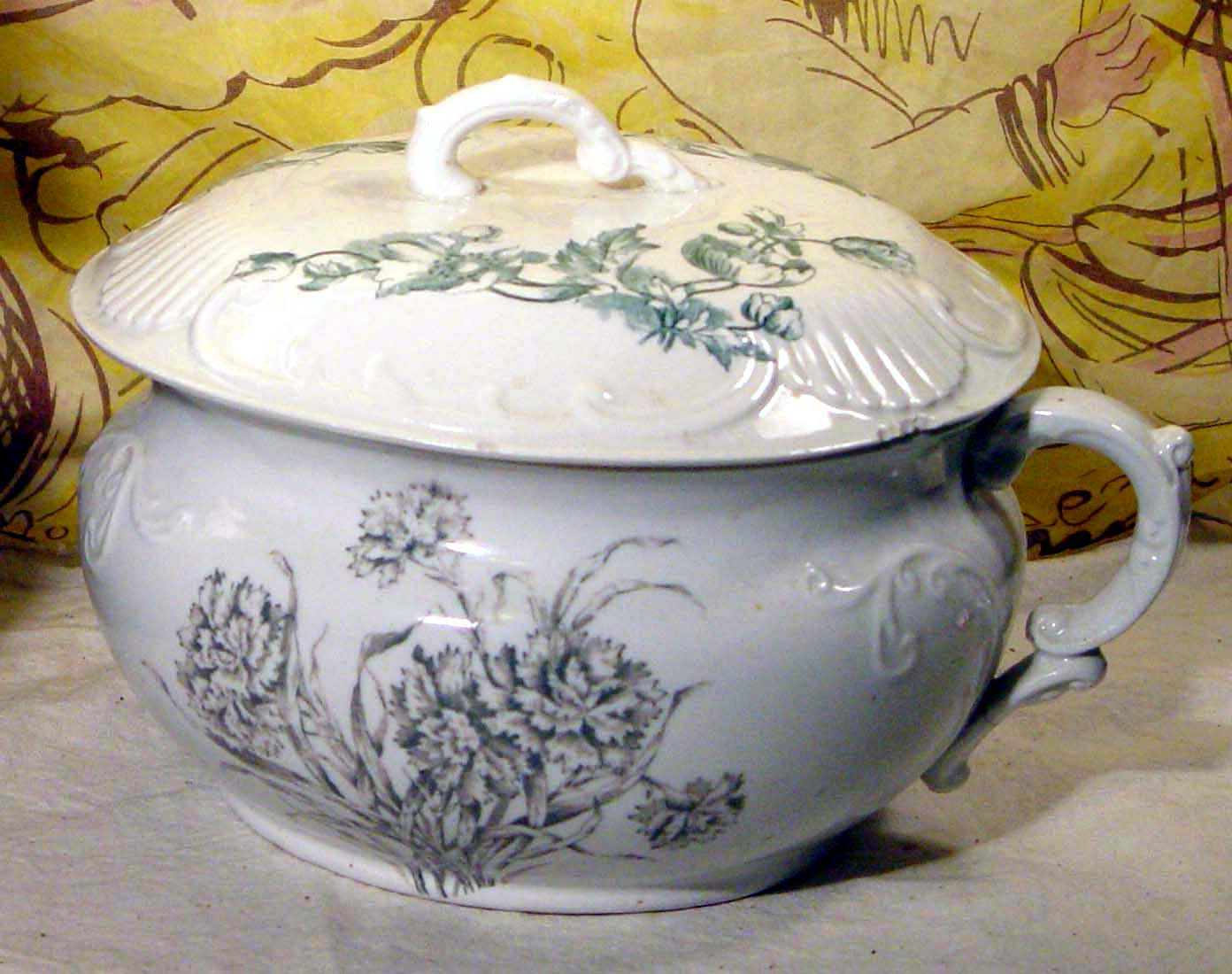
I know this Victorian-era chamber pot looks like a soup tureen, but it only has one handle.
Grandma Ruby had a bathroom, but preferred to use the privy that was attached to the barn out back.
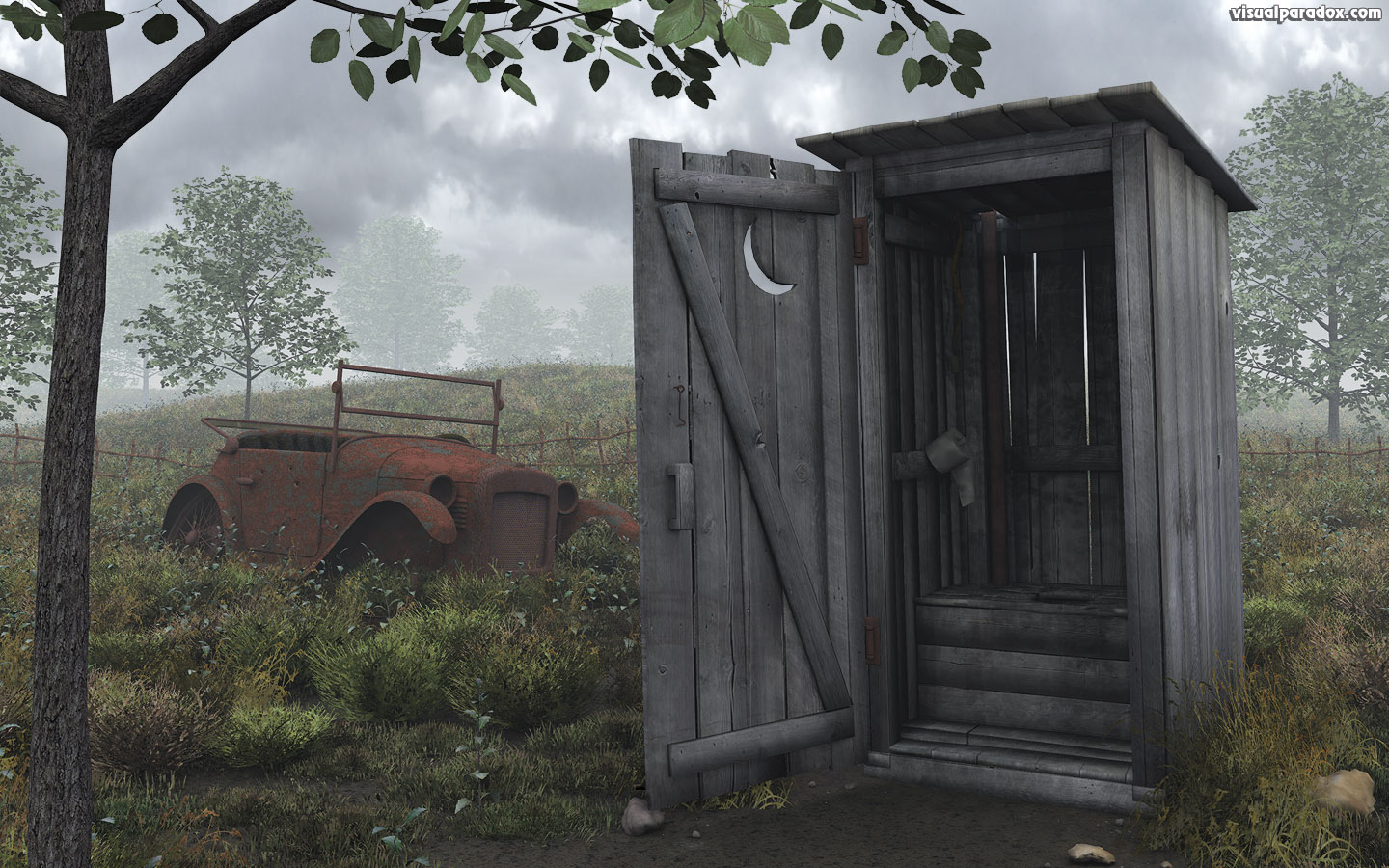
This outhouse looks like the one we had at our “up north” summer cottage when I was a kid!
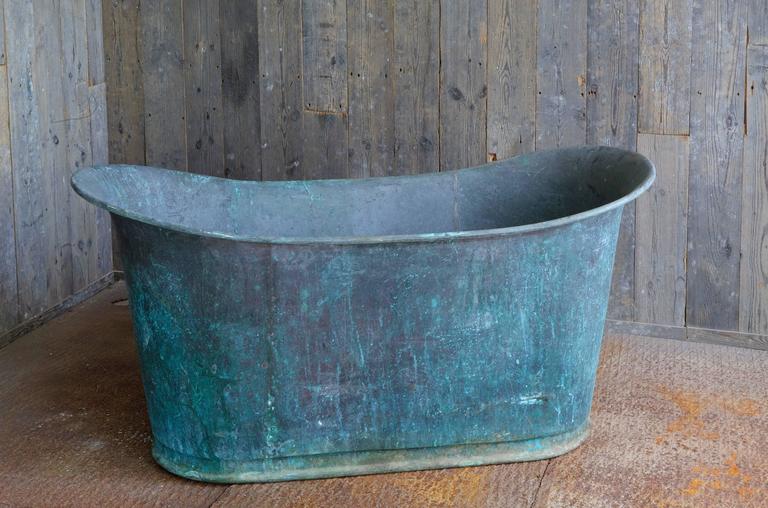
There was no such thing as a bathroom for many people (yes, here in the USA too) until the 1930’s, particularly in rural areas. Water was heated on the stove and put into a portable tin or copper tub in the kitchen for bathing, usually once a week. My mother told me a story about the time she was bathing in the kitchen, when all of a sudden something rattled the door knob. She was really startled, but then found out it was just a horse!
If you are interested in investigating the history of the toilet in more depth, this is an excellent program on the subject, produced by the BBC (see, I told you they talk about this stuff a lot.)




 Stella's Place
So MANY possible puns. Anyway, have a relative who referred to the small dresser by the be as a commode?Not used much these days – the term for the dresser or the original device itself – but a commode used to store a chamber pot. I saw some in European antique shops you could also sit on to use the pot.
In Germany in the early 60s the honey wagons were still used on farms and were the butt of many jokes. You’d see the farmers using them to spread night soil on their fields, drawn by a tractor or horses.
My last time in Korean in ’99 I was there in latte winter. On my way down on the bus from the Korean version of Cheyenne Mountain I’d pass terraced Korean farms where, on those occasions when the temps were above 32 degrees, the smell of months worth of defrosting night soil would waft up from the fields.
Then there’s Africa…
LikeLiked by 2 people
Also used to be a popular pastime painting you enemies’ faces on the inside bottom of chamber pots, a way to get back at political enemies that’s now been replaced by MSNBC and Twitter. One of the reasons William Randolph Hearst was expelled from Harvard was he’d sent professors he didn’t like chamber pots with their pictures painted in them…seems journalism hasn’t changed all that much.
LikeLiked by 2 people
DH has told me tales of his childhood in Newcastle-Upon-Tyne. They had an outhouse in a big city! They always kept chamber pots under the bed because it was mighty cold to go out at night! They also had a tin tub when he was young, and the whole family would take their weekly bath, starting with the babies. Then Dad, who was an accountant at the dockyard, then everybody else, Mom was last! I actually saw the outhouse, which is a storage place now. It drained off behind the house to the alley and went down the road ( a sewer pipe). They had modern plumbing put in in the 60’s.
Some of the potty tales he told me where hilarious! They also had a bomb shelter in the back garden.
Growing up, I’ve had an outhouse a few times. I even remember one that had two seats!
LikeLiked by 1 person
When I was in Europe in 1968 many bathrooms had torn-up newspaper put out for your use. Places you paid for had toilet paper like in the US.
LikeLiked by 1 person
Many places of interest we visited out west when I was a kid had outhouses, some with two seats.
LikeLike
I had that experience too!
LikeLiked by 1 person
There is a short story, by Ray Bradbury or Robert Heinlein I think, about a family in the far future which is in charge of managing all the sewerage for a planet. They are completely socially ostracized, despite the fact they never touch any waste and everything is mechanized. They are hugely rewarded monetarily but have to live separately from other people, cannot go to restaurants or stores, and cannot marry outside their clan.
LikeLike
Sounds familiar.
LikeLiked by 1 person
In Pompeii, I seem to remember that one of the public toilets of old (pissoir on one side; other business on the other side), were designed so the urine would flow under the street in a trough to the tannery and laundry/bleaching area buildings.
LikeLiked by 1 person